
Flashing is the metal that seals the spots where your roof meets something else: a vent, a wall, a chimney or a valley. Those joints are where a lot of leaks start, and a flashing repair means taking up the roofing around the spot, replacing or resealing the flashing, and putting the roofing back.
If you have a stain on the ceiling near a vent or an outside wall, the flashing is one of the first things worth checking. Below is where flashing sits on a roof, how to tell it's failing, and what the fix looks like on shingle and tile. If you already know you need help, here's how we handle roof repair in Cave Creek and across the Valley.
What roof flashing is and where it sits
A roof is good at shedding water across a flat run of shingles or tile. It's weakest wherever that run stops for something. Flashing is the metal piece that bridges the gap and turns the water back onto the roof.
Vent and pipe flashing
Every plumbing vent, exhaust vent and pipe that comes through the roof has a flashing around it. The roofing laps over the top edge of it and under the bottom edge, so water running down the roof flows over the flashing instead of into the hole.
Wall and step flashing
Where a roof runs into a wall, such as a second story or a garage that sits higher than the house, flashing runs up the wall and under the roofing. On a shingle roof that's usually step flashing, a separate piece tucked in with each course of shingles.
Chimney flashing
A chimney is a wall on four sides, so it gets flashing on all four. The uphill side takes the most water, since everything running down the roof hits it.
Valleys
A valley is where two slopes of the roof meet and carry water down the same channel. It moves more water than any other part of the roof, which is why it gets its own metal or a lined channel under the roofing.
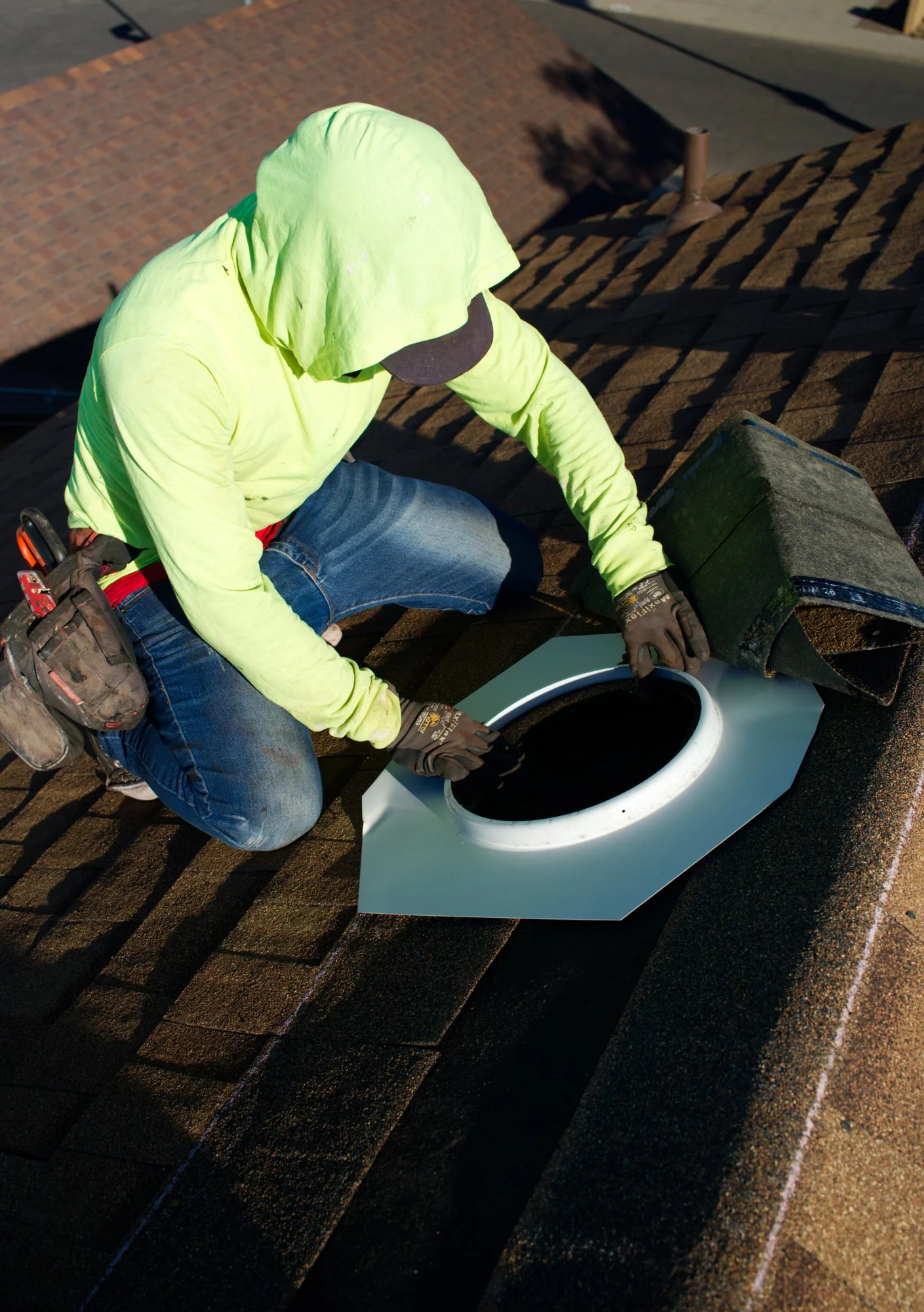
A new vent flashing going in on a Phoenix shingle roof
Signs your flashing is failing
Flashing problems usually show up inside before you see them on the roof. Watch for:
- A water stain on the ceiling near a vent, a fireplace or an outside wall
- A stain that grows after a storm and then dries out
- Metal that has lifted, bent or pulled away from the wall
- Rust on the flashing
- Sealant around the edges that has cracked, shrunk or come loose
- Shingles or tile around a vent that have slipped or broken
The spot on the ceiling isn't always right under the problem. Water can run along the underlayment or a rafter before it drips, which is why it pays to have someone trace it from the roof side.
Why sealant alone is a short term patch
A tube of roof sealant around a vent can stop a drip for a while. It's a reasonable thing to do to get through a storm. But sealant sits in the sun all day, and the Arizona sun and heat are hard on it. Once it dries out and cracks, the water finds the same path again.
Flashing that's been installed right doesn't depend on sealant to keep water out. It depends on how the metal and the roofing overlap. When that overlap is wrong, or the metal itself is damaged, more sealant on top doesn't fix the cause. A real repair goes under the roofing and puts the flashing and the layers around it back the way they should be.
How flashing repair works on a shingle roof
On a shingle roof, the roofer loosens and lifts the shingles around the spot, takes out the old flashing, and checks the underlayment and the deck underneath for damage. New flashing goes in, the underlayment around it is patched or replaced where needed, and shingles go back over it in the right order so each one laps the one below.
Where the old shingles crack when they're lifted, they get replaced. The goal is a spot that sheds water the same way the rest of the roof does.
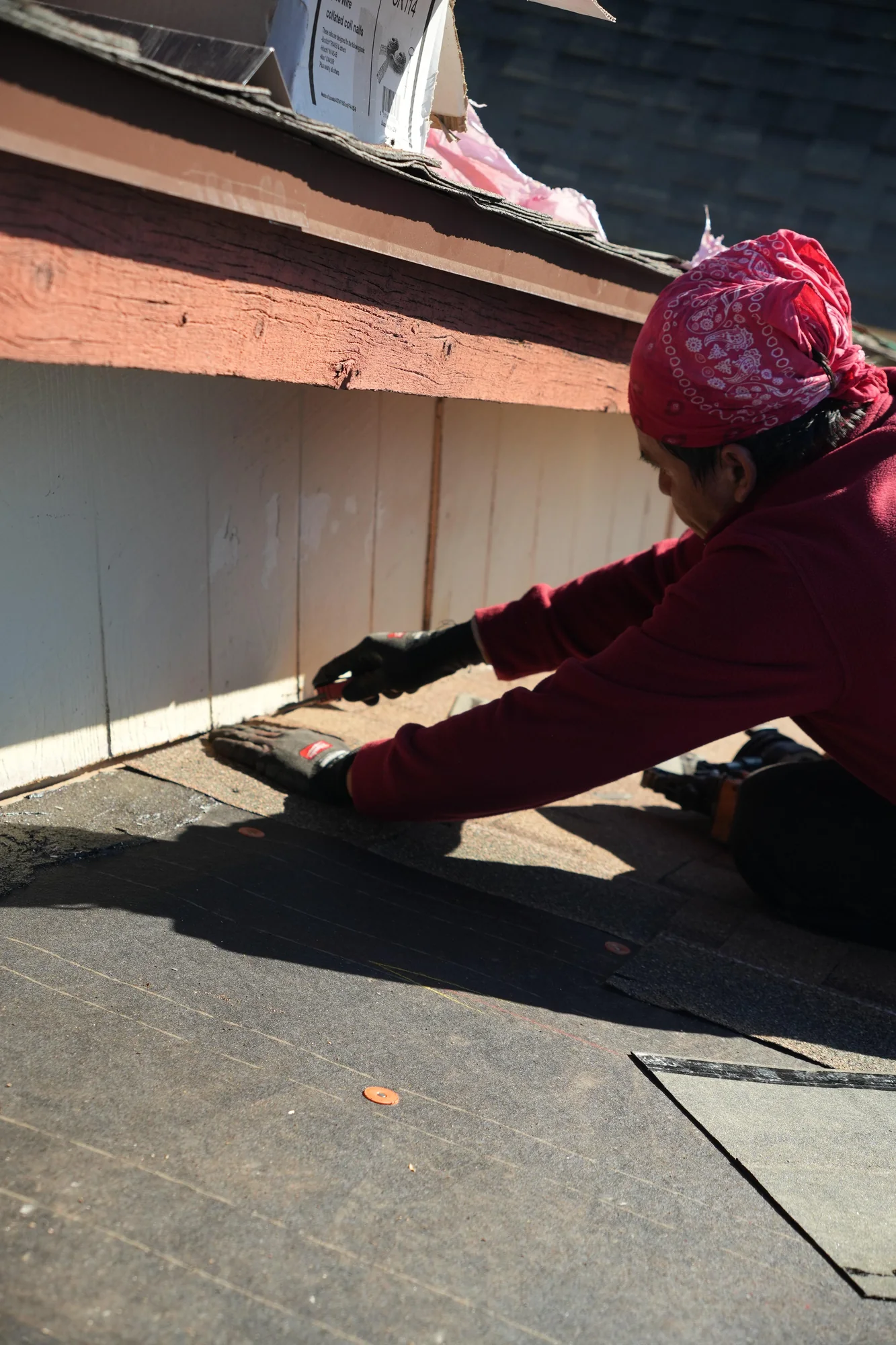
New shingles going in along a wall, Phoenix
How flashing repair works on a tile roof
Tile changes the job. The tile around the spot has to be lifted and set aside before anyone can reach the flashing and the underlayment under it. After the flashing and underlayment are fixed, the tile is reset in place, with any broken pieces replaced.
On a tile roof the flashing and the underlayment work together, so we look at both. Tile can look fine from the street while the layer under it is worn out. If that's what we find around the leak, you'll see it in the pictures. More on how we work on tile roofing.
When flashing is part of a bigger job
Sometimes the flashing isn't the only thing that's worn out. If the roof leaks in more than one place, or the underlayment is failing across the whole roof, fixing one vent won't keep the water out for long. If you're weighing that call, we cover it in roof repair or roof replacement.
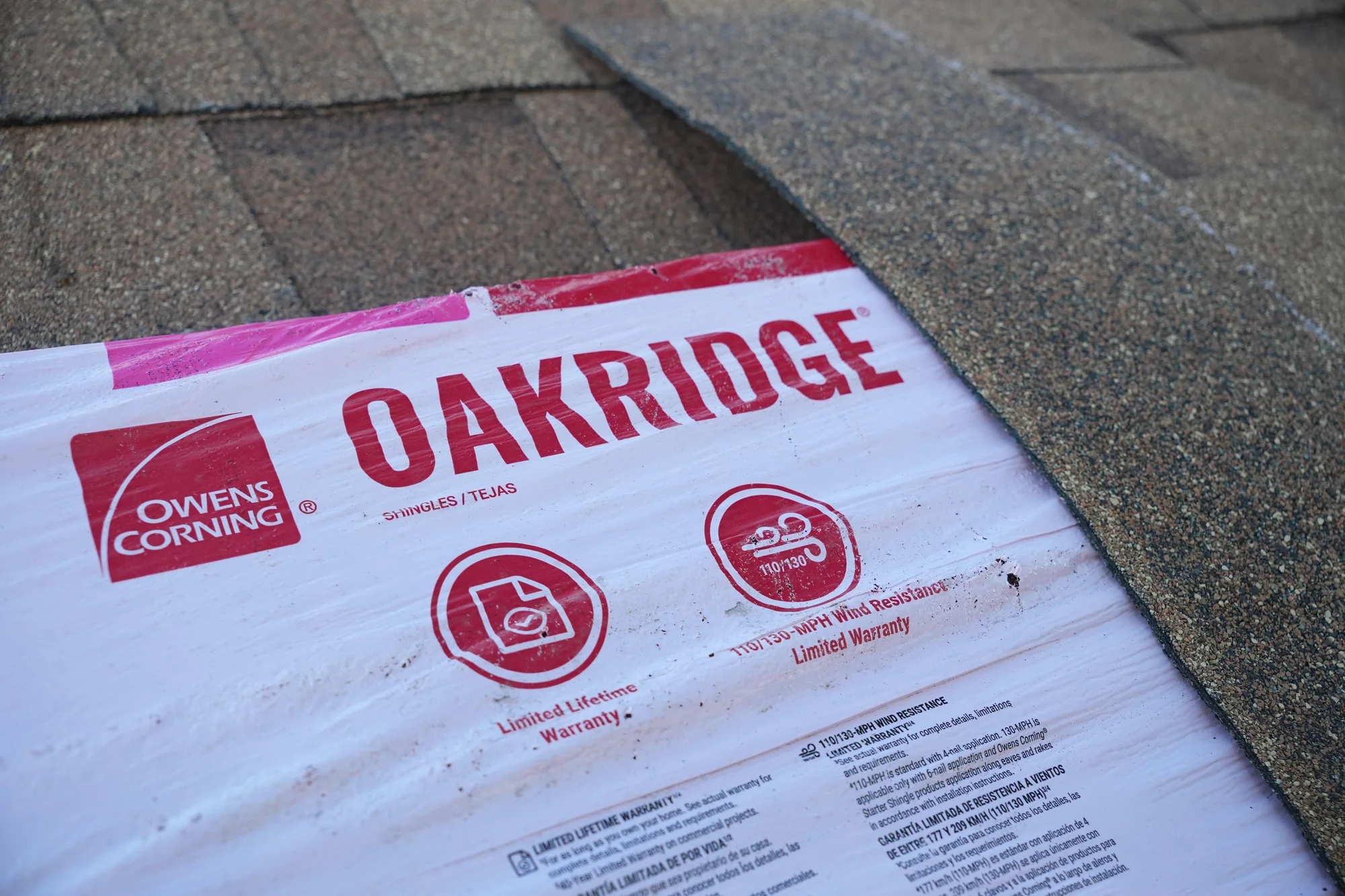
When a roof does get replaced, the flashings get replaced with it. On a Phoenix shingle roof replacement, we tore the old shingles off to the deck, put down new underlayment, set new vent flashings and finished with Owens Corning Oakridge shingles. Our work comes with a 15 year workmanship guarantee.
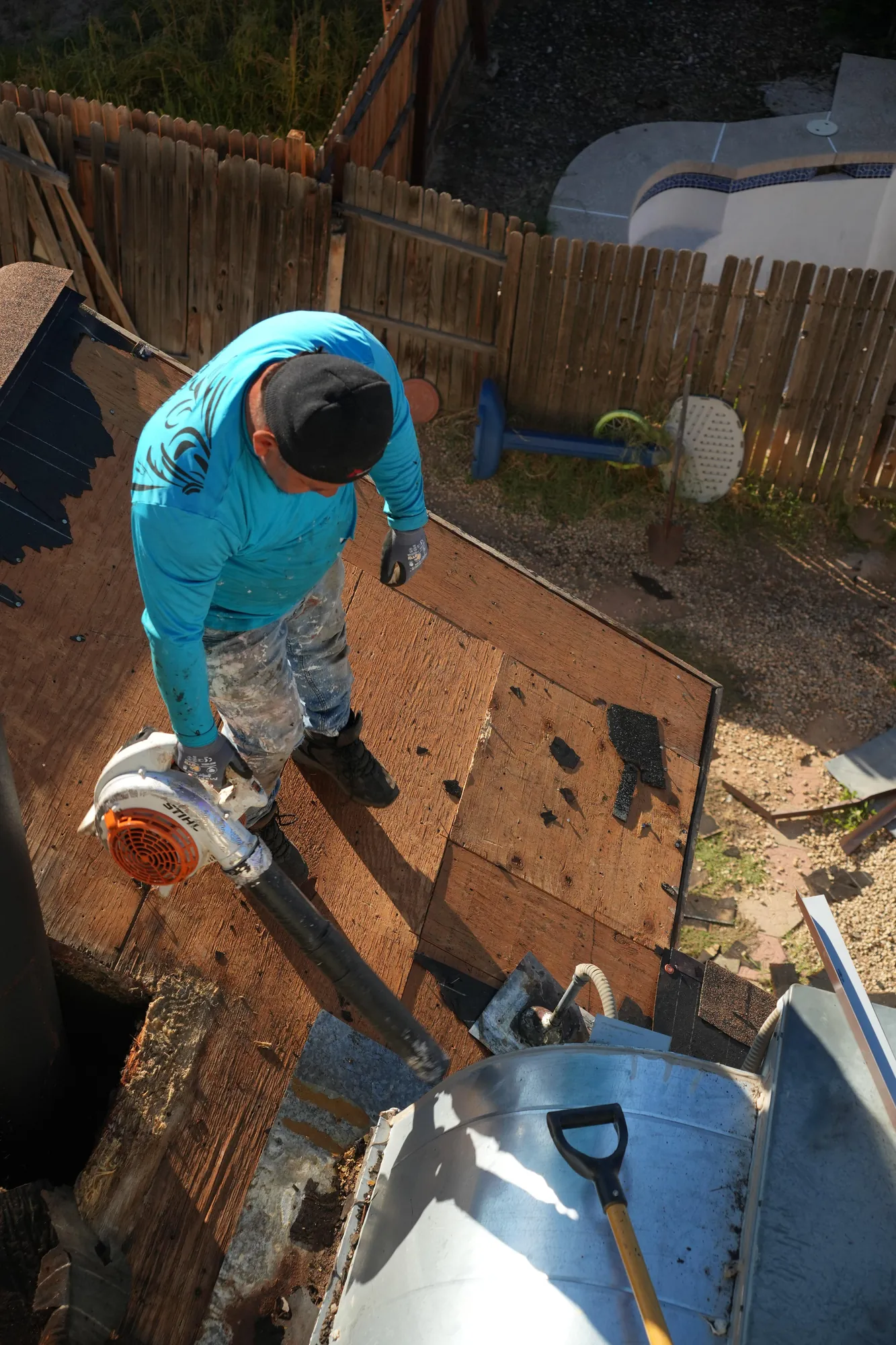
The bare deck cleaned after the tear off, Phoenix
Get the spot checked before the next rain
A flashing leak doesn't fix itself, and every storm sends more water to the same place. Call (480) 498-8757 or request a free estimate, and we'll find where the water is getting in and show you the pictures.