
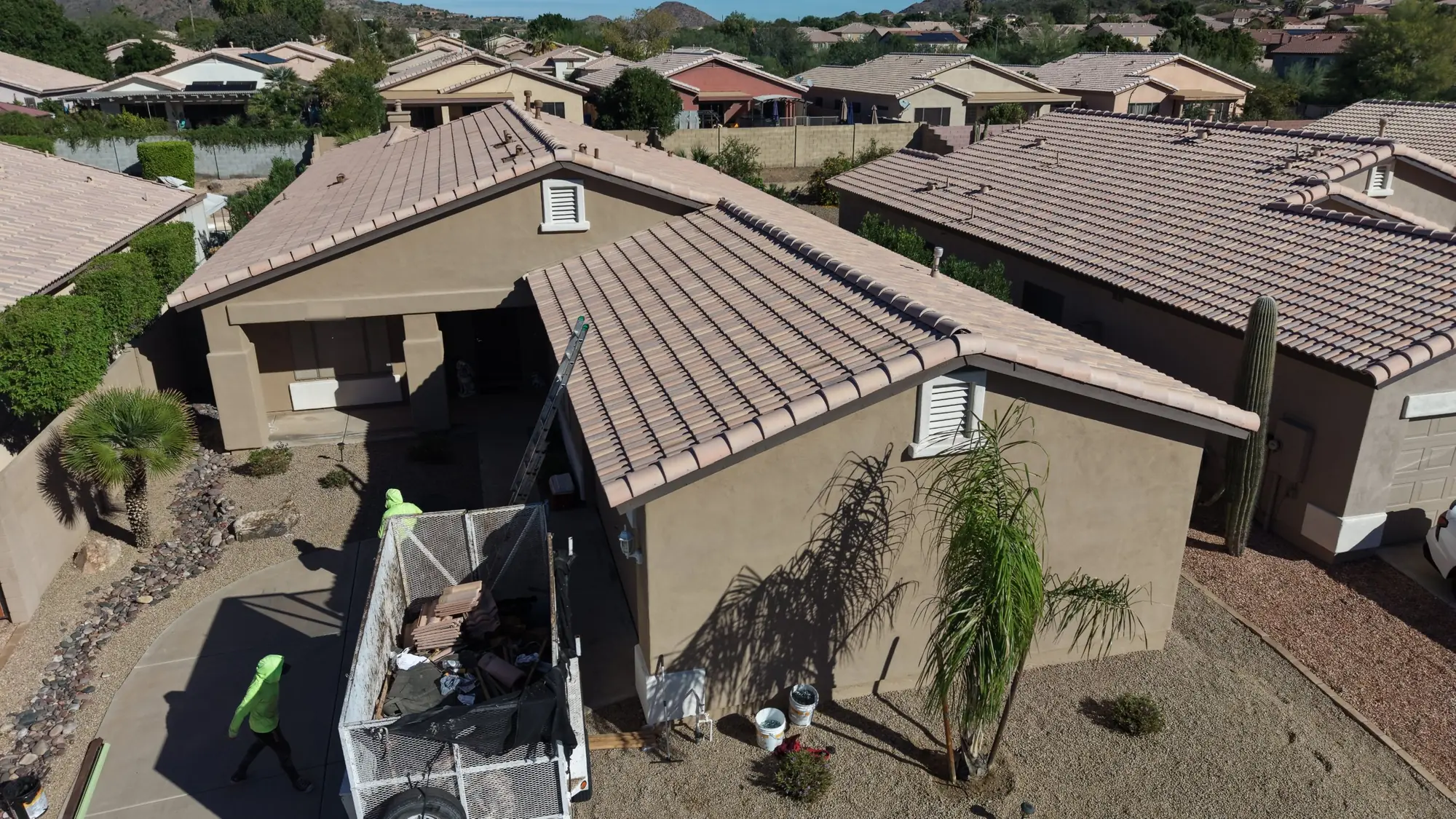
A roof repair makes sense when the damage is limited to one area and the layers under it are still sound. A replacement makes sense when the problems are spread across the roof or the underlayment underneath has worn out, and on a tile roof there is often a middle option: new underlayment with the same tile put back on.
The only way to know which one you have is to get someone on the roof. Below is what we look at to make that call, how it plays out on shingle and tile roofs, and what a roof replacement involves when that turns out to be the answer.
What a roofer looks at to decide
A leak tells you water is getting in. It doesn't tell you why, or how much of the roof is involved. These are the things that decide it.
How far the damage goes
A cracked tile, a few missing shingles or one bad spot around a vent is a local problem. Damage showing up in several places across the roof points to the roof wearing out as a whole. At that point, patching one spot at a time stops making sense.
The underlayment and the deck
Under every shingle or tile roof is a layer of underlayment, and under that is the wood deck. The underlayment is what actually keeps water out of the house. If it's still in good shape, a repair on top can hold. If it has dried out and cracked across the roof, fixing the top layer won't stop the next leak. Soft or water damaged decking is another sign the problem runs deeper than one spot.
Flashings and vents
Plenty of leaks start where the roof meets something else: around vents, along walls and in valleys. The flashing at those spots can fail on its own while the rest of the roof is fine. That's usually a repair, not a new roof.
Leaks that keep coming back
If the same area has been patched before and it's leaking again, the patch probably isn't the real issue. Something underneath is.
Arizona sun and heat age every roofing material, and monsoon storms tend to find the weak spots. That's how a roof can look fine from the street and still leak the first time a big storm rolls through.
When a roof repair is the right call
A repair fits when the problem is limited and the roof around it is still sound. A slipped or broken tile, a lifted shingle, a failed flashing around a vent or a small area of storm damage can all be fixed without touching the rest of the roof. We find where the water is really getting in, show you pictures and fix that spot. Here's more on how we handle roof repair.
A repair can also buy you time. If the roof is getting older but the leak is isolated, fixing it now and planning the bigger job later is a reasonable choice. Just ask the roofer to tell you what else they saw while they were up there.
Shingle roofs: repair or tear off
On a shingle roof, the choice is usually clear. Isolated damage gets repaired. When the shingles are worn across the roof, or the underlayment beneath them has failed, the old roof comes off and a new one goes on. Shingles can't be lifted and reused the way tile can, so there isn't a halfway option.
Tile roofs: the middle option
Tile roofs work differently. Concrete and clay tile usually outlasts the underlayment beneath it. When the underlayment wears out, you often don't need new tile. You need new underlayment, with your tile put back on top.
That's the job we did on a Phoenix tile roof underlayment replacement. The tile was lifted and stacked on the roof, new underlayment went down, and the same tile went back on. The old material was hauled off. It's more than a repair, since the whole layer under the tile is new, but you keep the tile you already have. See how tile roof underlayment replacement works.
A tile roof with one broken tile or one leak at a flashing may only need a repair. A tile roof that leaks in more than one place, or keeps leaking after patches, is often telling you the underlayment is the problem.
What a full roof replacement involves
When the roof does need replacing, the old roof comes off and everything goes back new. On a Phoenix shingle roof replacement, our crew:
- Tore the old shingles off down to the deck
- Put down new underlayment
- Set new vent flashings
- Installed Owens Corning Oakridge shingles
Tearing off to the deck means the wood underneath gets seen before anything new covers it. We install Owens Corning Oakridge shingles on all our shingle roofs. They carry a limited lifetime material warranty, and our work is backed by a 15 year workmanship guarantee.
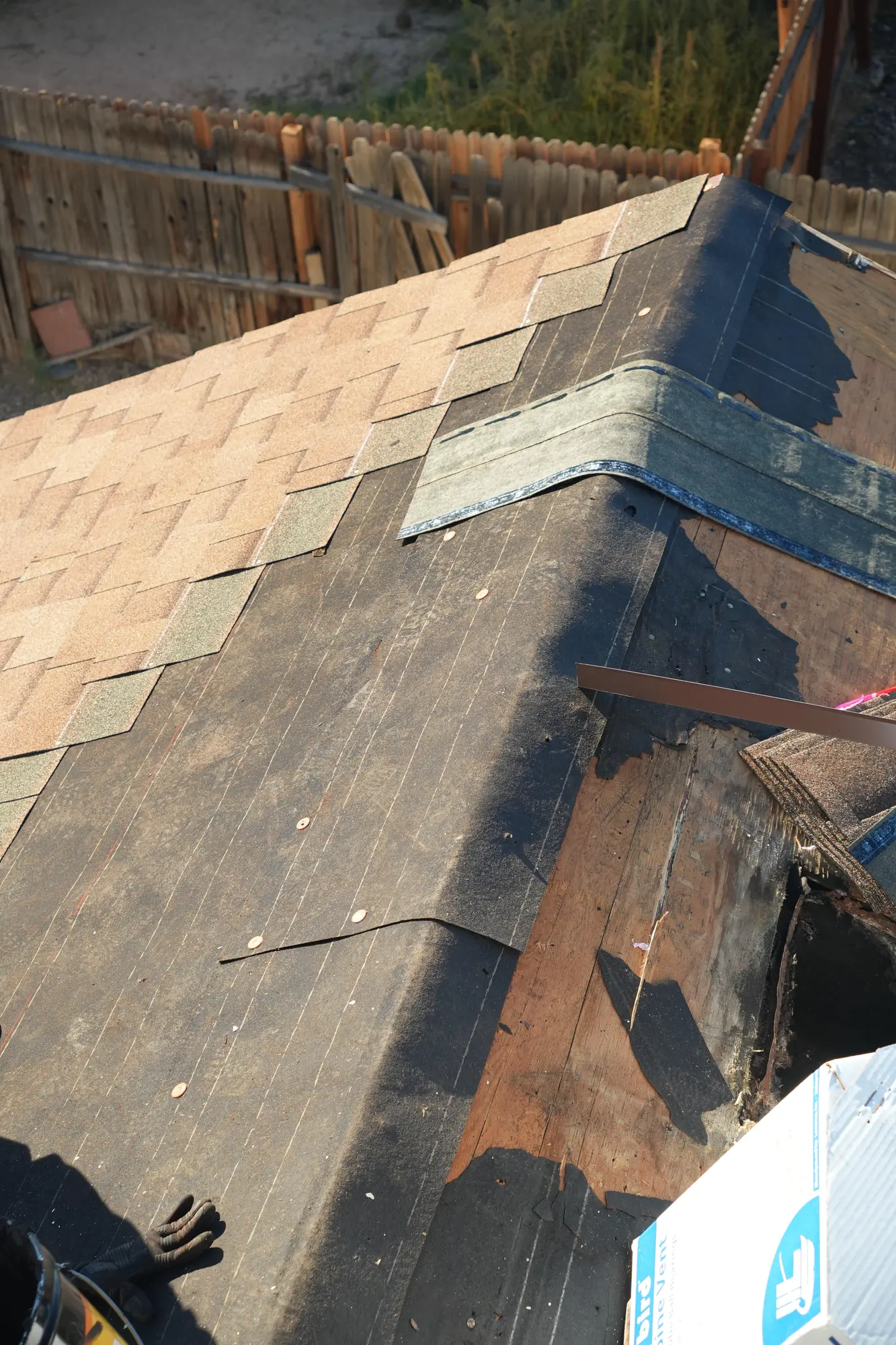
New underlayment going down after the tear off, Phoenix 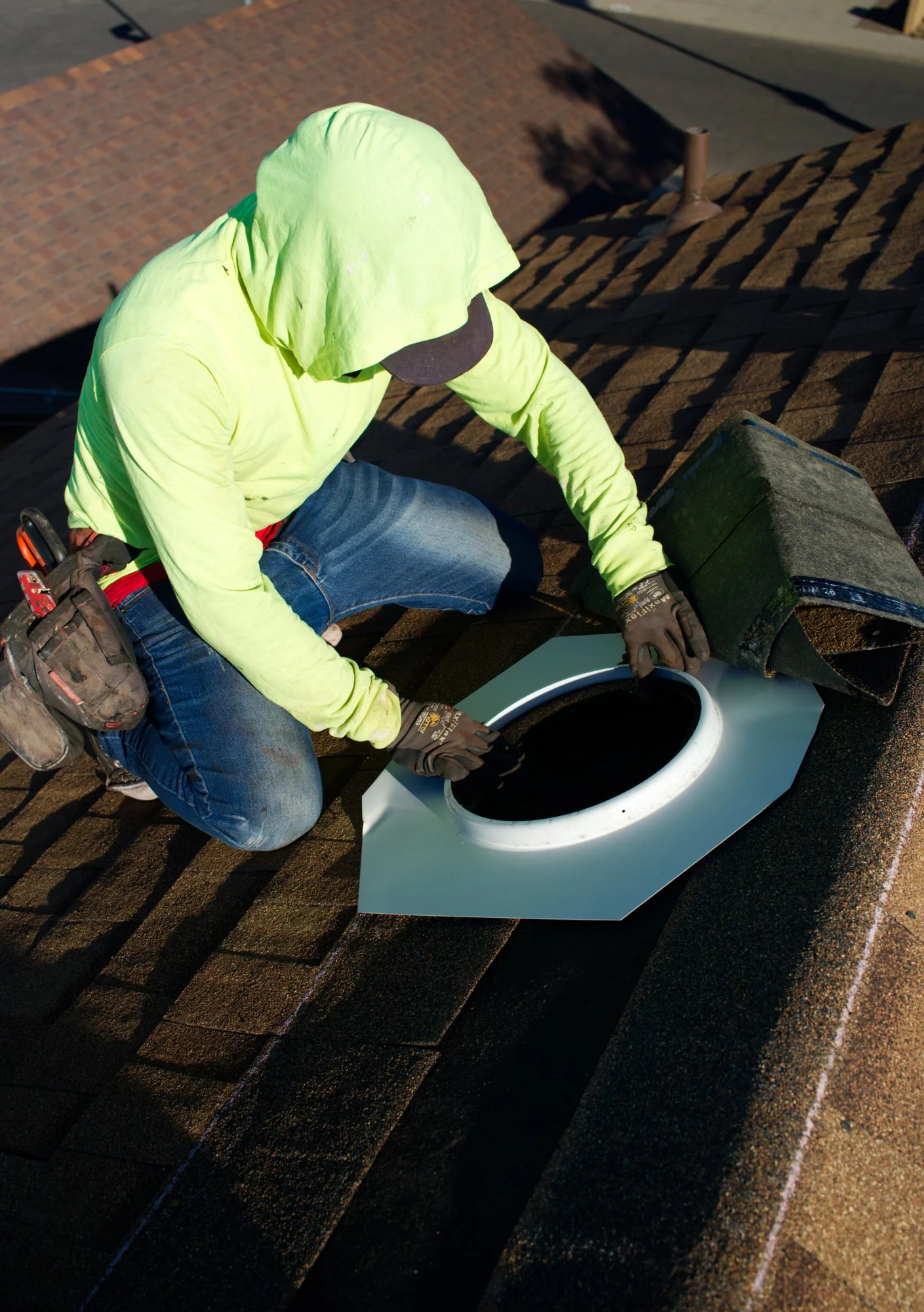
A new vent flashing on the same Phoenix roof 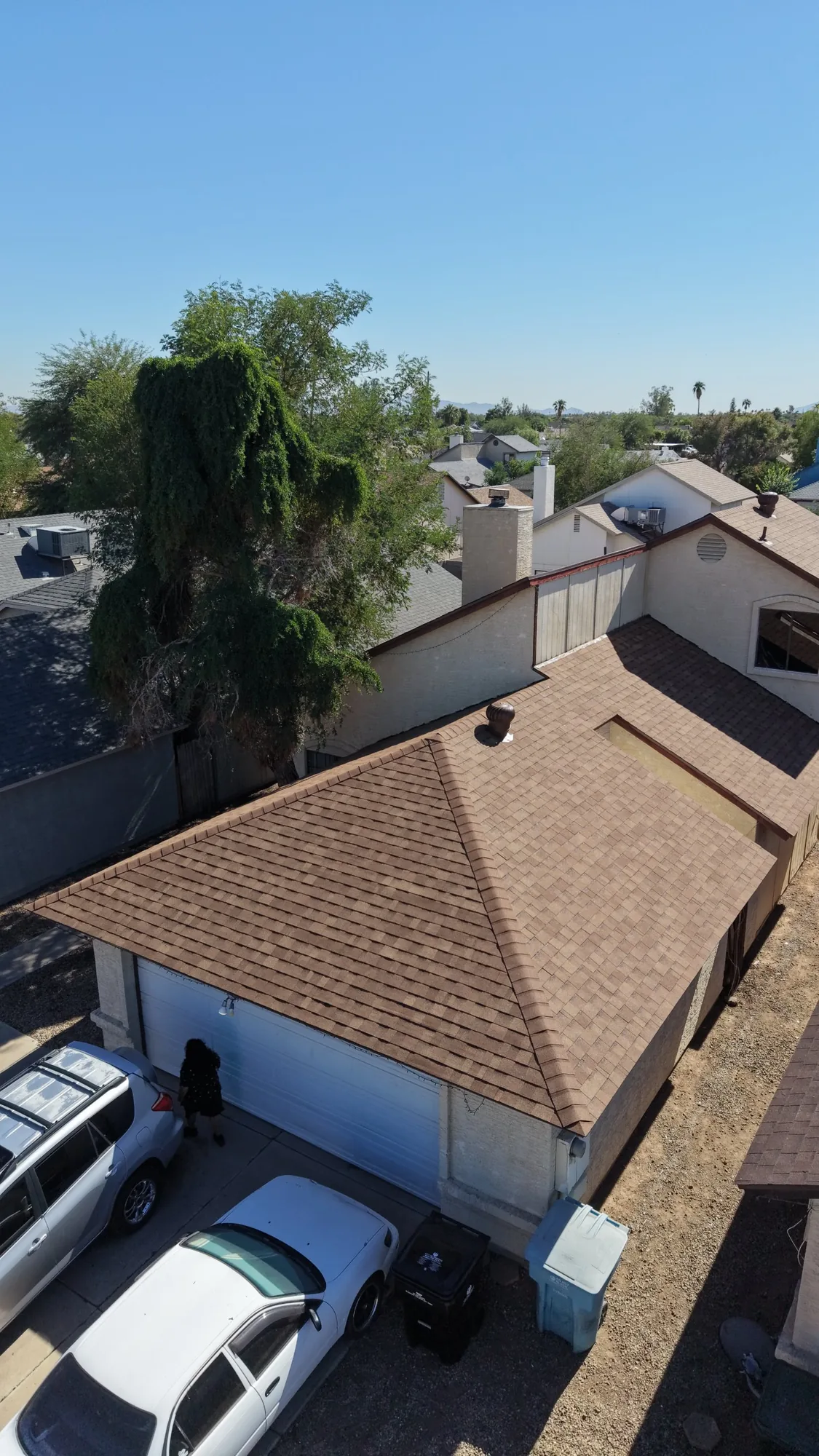
The finished roof, Phoenix
How long does a roof replacement take?
It depends on the size of the roof, the roof type and the weather. The Phoenix shingle roof above took 2 days. The Phoenix tile underlayment job took 4 days, including a rain delay. You get the schedule with your quote, before anything starts.
Get a roof check before you decide
You shouldn't have to guess whether you need a patch or a new roof, and you shouldn't trust a quote written from the driveway. We get on the roof, show you pictures of what we find and put the price in writing. Arizona Valley Roofing is licensed under AZ ROC #270515, BBB A+ Accredited since 2011 and an Owens Corning Platinum Preferred Contractor.
Call (480) 498-8757 or request a free estimate.